
So you’re weighing up the University of Manchester as your next move. The UK Manchester university you keep reopening in a browser tab at midnight — that one. Maybe it’s a screenshot saved on your phone, maybe it’s a course page you can’t stop scrolling. Either way, you’ve landed in the right place, because this is a plain-English guide to what studying at this UK Manchester university actually involves: the courses on offer, what the fees really come to once you stop reading the headline number, and how the admissions machinery works when you’re applying from abroad.
Reading time: about 10 minutes (yes, Yoast clocked it — settle in with a cuppa).
I’ll be honest about one thing up front: Manchester is big. Like, genuinely big. Over 44,000 students big, with more than 14,000 of them coming from outside the UK. That scale is either thrilling or slightly terrifying depending on your temperament, and I think you deserve to know which camp you fall into before you commit a few years of your life (and a non-trivial pile of money) to the place.
Let’s get into it.
Why the UK Manchester university keeps showing up on shortlists
There’s a reason this university lives rent-free in so many application lists. It’s a Russell Group institution — Britain’s research-heavy clubhouse — and it sits comfortably in the global top tier. In the QS World University Rankings 2026, the University of Manchester landed at 35th in the world and 7th in the UK. The Times Higher Education table for the same year placed it 56th globally. Rankings wobble year to year (they always do), but Manchester has parked itself in the top 100 for ages now, which tells you the strength is structural, not a fluke.
Then there’s the research pedigree, which is frankly absurd. Twenty-five Nobel laureates have passed through its corridors. Graphene was isolated here. If you’re the sort of person who gets a small thrill from studying somewhere that did things, Manchester scratches that itch.
But here’s my slightly contrarian take — and I’ve sat across the table from enough students to feel confident saying it: rankings are the least useful thing on this page. What matters more is whether the course fits you, whether you can afford it without lying awake at night, and whether you’ll actually get in. So let’s talk about that.
A small warning before we go further: every figure below is indicative. Universities revise fees, deadlines, and entry grades constantly, and a course page can contradict a guide like this one without anyone telling you. Treat this as your map, not your GPS. Always confirm against the official Manchester course pages before you commit.
UK Manchester university courses: more than you can shake a prospectus at
The University of Manchester runs something in the region of 1,000 degree programmes across three big faculties — Humanities; Science and Engineering; and Biology, Medicine and Health. Undergraduate, postgraduate taught, postgraduate research. The lot.
A quick tour of what students actually flock to:
- Engineering and Materials Science — unsurprising, given the graphene thing. Mechanical, electrical, civil, chemical.
- Business and Management — Alliance Manchester Business School is one of the few “triple-accredited” schools in the world, if that acronym soup means anything to you.
- Computer Science — the department traces back to the people who built one of the first stored-program computers. Proper heritage.
- Medicine, Nursing and Health — Nursing here has ranked among the world’s best by subject, which is no small thing.
- Law, Politics, Psychology, Economics — the social-sciences heavyweights that fill lecture theatres every September.
If you’re still figuring out what to study rather than where, it’s worth browsing broadly first. Uni Student HUB keeps a fairly sprawling list of undergraduate courses and postgraduate courses across UK institutions, which can be a gentler starting point than diving straight into one university’s 1,000-strong catalogue.
A note on the postgraduate side, because it confuses people: Manchester’s master’s degrees mostly run on a staged or rolling admissions model rather than one hard cut-off. Translation — apply early, because popular courses fill up and then quietly stop accepting people. If you want the longer version of how UK master’s degrees actually work (the part the brochures skip), this insider’s guide to UK master’s programmes is worth a read.
Now the part everyone scrolls to: the money
Right. Fees. Take a breath.
For the 2026/27 academic year, the UK Manchester university has set its standard international undergraduate tuition at £33,100 a year for most courses. That’s the benchmark. Some programmes sit higher — a few business and IT-flavoured degrees, for instance, and clinical subjects like Medicine climb dramatically beyond that. Home (UK) students, by contrast, pay the government-capped £9,790 for 2026/27.
Postgraduate fees are messier to pin down because they swing hard by subject. A taught master’s for an international student typically lands somewhere in the £24,000–£38,000 range, with the MBA and certain specialist programmes pushing well past that.
Here’s a clean breakdown of the headline numbers:
| Student type | Level | Indicative annual tuition (2026/27) |
|---|---|---|
| Home (UK) | Undergraduate | £9,790 |
| International | Undergraduate (standard) | £33,100 |
| International | Undergraduate (high-cost/clinical) | £35,000 – £50,000+ |
| International | Postgraduate taught | £24,000 – £38,000 |
| International | MBA | Considerably higher — check directly |
And then there’s the bit students forget: living costs. Manchester is meaningfully cheaper than London — that’s a big part of its appeal — but it isn’t free to exist. Budget roughly £900–£1,400 a month for rent, food, transport, and the occasional regrettable night out. Over a year, that’s another £11,000–£17,000 on top of tuition. I’ve watched too many people fixate on the tuition number and then get blindsided by month four. Don’t be that person.
A frame I wish someone had given me: don’t ask “can I afford the fee?” Ask “can I afford the fee plus twelve months of living, minus whatever scholarship or part-time work realistically comes in?” The honest answer to that second question is the one that matters.
On scholarships — the UK Manchester university does run them. The Global Futures Scholarships, for example, offer reductions of several thousand pounds for strong international applicants, and individual departments often have their own pots. They won’t cover everything, and they’re competitive, but they’re real money and worth chasing. Sorting out funding is genuinely one of the more stressful corners of this whole process, which is exactly where scholarship and financial-aid advisory becomes less of a luxury and more of a sanity-saver.
Getting into the UK Manchester university: the admissions reality
Let me be straight with you. Manchester is selective but not impossibly so — its acceptance rate floats somewhere around 40–50% depending on whose unofficial figures you trust, which makes it more reachable than some of its Russell Group siblings. That’s good news. It does not mean you can coast.
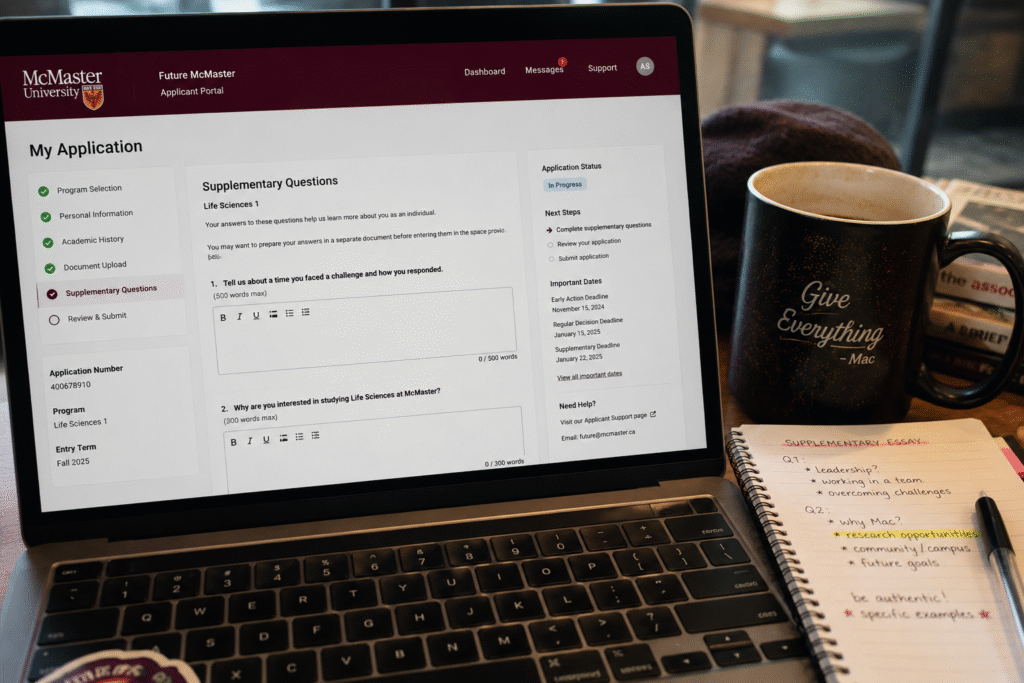
Undergraduate applications go through UCAS, the UK’s central system. You’ll be looking at typical A-level offers in the AAA to ABB band, or International Baccalaureate scores around 34–36 points, with exact requirements shifting by course. Medicine and the most competitive subjects sit at the top of that range and add extra hoops (admissions tests, interviews).
Postgraduate applications mostly go direct through the university’s own portal. The general bar is a good bachelor’s degree — broadly a UK 2:1 equivalent, often quoted as 60–65% or higher depending on your home grading system.
For English, you’ll need to prove proficiency. Across most courses, the IELTS requirement lands between 6.0 and 7.0 overall, with no individual band dropping below 6.0 (and foundation routes sometimes accepting 5.5). Competitive and clinical programmes ask for more. Always — always — check the specific course page, because “the university requires 6.5” is the kind of half-truth that gets people caught out.
Here’s a rougher-edged table pulling the application essentials together. Note it’s deliberately a bit untidy — real admissions info never lines up as neatly as we’d like:
| What you need | Undergraduate | Postgraduate taught |
|---|---|---|
| Apply through | UCAS | University portal (direct) |
| Academic bar | AAA–ABB / IB 34–36 | Bachelor’s, ~2:1 equivalent |
| English (IELTS) | 6.0–7.0 | usually 6.5–7.0, varies |
| References | 1 reference | often 2 |
| Key deadline | Jan (UCAS main); Medicine 15 Oct | rolling — apply early! |
| Personal statement | Yes, 4,000 characters | Yes — plus sometimes work experience |
The personal statement is where applications live or die, and I will gently die on this hill. A list of your achievements is not a personal statement. A genuine, specific account of why this subject lit a fire in you — that’s the thing admissions tutors remember at 4pm on a Friday when they’ve read ninety others. Interview and admission preparation matters here too, especially for the courses that screen you face-to-face.
A few things the rankings won’t tell you
Manchester the city is half the pitch, honestly. It’s a music town, a football town (two clubs, pick your poison), a former-industrial town that reinvented itself into something genuinely exciting. The campus threads right through it rather than sitting walled-off on a hill somewhere. For an international student, that means the place you study and the place you live are the same place — no commuting in from some grey satellite. I rate that more highly than I probably should.
The flip side? It rains. A lot. Pack a proper coat and make peace with it early.
Where a bit of guidance actually helps
I’m not going to pretend you can’t do all of this alone — plenty of people do. But the UK application system has odd edges that catch international students off guard: the difference between firm and insurance choices, what a conditional offer really commits you to, how CAS letters and student visas slot together, when your IELTS certificate needs to land. Miss one and you can lose a whole intake cycle.
This is where Uni Student HUB tends to earn its keep. They’re education consultants based at 107 Fleet St, London EC4A 2AB, and their work runs the full length of the journey — study-in-the-UK guidance, end-to-end university admissions support, interview and admission preparation, scholarship and financial-aid advisory, university placement services, and even pre-departure orientation for when the offer’s in hand and the nerves kick in. If you’re an international student trying to make sense of it all, having someone who’s walked the path before can turn a fortnight of confused googling into a single clear conversation.
You can reach the team on +44 7361 804843 if you’d rather just ask a human. No harm in a chat — the worst case is you walk away knowing more than you did.
FAQ — the questions I get asked most
Is the University of Manchester good for international students? Yes, and not just on paper. With 14,000+ international students from 160-odd countries, you won’t be a curiosity — you’ll be part of one of the most globally mixed campuses in the UK. The support infrastructure is built around that reality.
How much does it cost to study at the University of Manchester as an international student? For 2026/27, standard international undergraduate tuition is around £33,100 a year, with clinical and some specialist courses higher. Add roughly £900–£1,400 a month for living. Postgraduate fees vary widely by subject.
What IELTS score do I need for the University of Manchester? Most courses want 6.0–7.0 overall with no band below 6.0, though competitive programmes ask for more. Check your specific course — this is the single most common thing people get wrong.
When should I apply? For undergraduate, aim for the UCAS January deadline (Medicine and Dentistry close earlier, on 15 October). For postgraduate, there’s often no hard cut-off, which sounds relaxing but isn’t — popular master’s courses fill on a rolling basis, so early really does mean better.
Can I get a scholarship? Possibly. Manchester offers several international scholarships, including the Global Futures awards, plus departmental funding. They’re partial and competitive rather than full rides, but worth the effort. Funding advisory is one of the things Uni Student HUB helps with.
Is Manchester better than other UK universities? “Better” depends entirely on your subject and your priorities. It’s stronger than most for research and city life, and more accessible than some of its Russell Group peers. For a wider view across institutions, browse Uni Student HUB’s universities directory and compare.
The honest closing thought
The University of Manchester is a serious, world-ranked, slightly overwhelming, genuinely brilliant place to spend a few years. The courses are deep, the fees are real, and the admissions process rewards people who plan early and write honestly. If you do those two things — plan and be honest — your odds at this UK Manchester university are a lot better than the rankings might make you fear.
And if the whole thing still feels like a maze, that’s normal. Reach out, ask questions, and take it one step at a time. Manchester will still be there, rain and all.