
Somewhere between “I want to study in the UK” and actually landing at Heathrow with a CAS letter in your bag, there’s a swamp. Nobody warns you about the swamp. It’s made of visa forms, conditional offers, IELTS scores that expire at the worst possible moment, and at least one email from a university admissions office that simply never arrives. This is exactly the terrain an ed consultant is built to walk you through — not because you couldn’t figure it out alone eventually, but because “eventually” is a luxury most applicants don’t have.
I’ve watched students spend six months chasing the wrong course code. I’ve also watched a properly good consultant sort the same mess in an afternoon. That gap is basically the whole argument for this article.
What an Ed Consultant Actually Does (Beyond “Help With Applications”)
Ask ten people what an education consultant does and you’ll get ten vague answers involving the word “guidance.” Fair enough — it’s a broad title. But strip away the marketing language and the job splits into a few concrete tasks:
- Matching your grades, budget, and goals to realistic course options (not just the famous ones)
- Managing the actual paperwork — transcripts, references, personal statements, the lot
- Prepping you for interviews, because yes, some UK courses still interview
- Chasing scholarship and financial aid deadlines you didn’t know existed
- Making sure your visa application doesn’t get bounced over a missing bank statement
A decent ed consultant does all of this quietly, in the background, while you get on with your actual life. A brilliant one also tells you when a course isn’t right for you — even if that’s an awkward conversation. That second bit matters more than people think.
Firms like Uni Student HUB, based at 107 Fleet St, London EC4A 2AB, tend to describe this as end-to-end admissions support, which is a slightly corporate way of saying: we don’t disappear after we’ve sent your first email.
Why “DIY” Applications Quietly Go Wrong
You can apply to a UK university without any help. Thousands do it every year, successfully. But here’s the thing nobody puts on a brochure: most application mistakes aren’t dramatic. They’re small, boring, and completely avoidable — a wrong module code, a personal statement that reads like it was written for a different course, a scholarship deadline that closes three weeks before you thought.
An experienced education consultant has usually seen your exact mistake before, on someone else’s application, two years ago. That’s the actual value. Not magic. Pattern recognition.
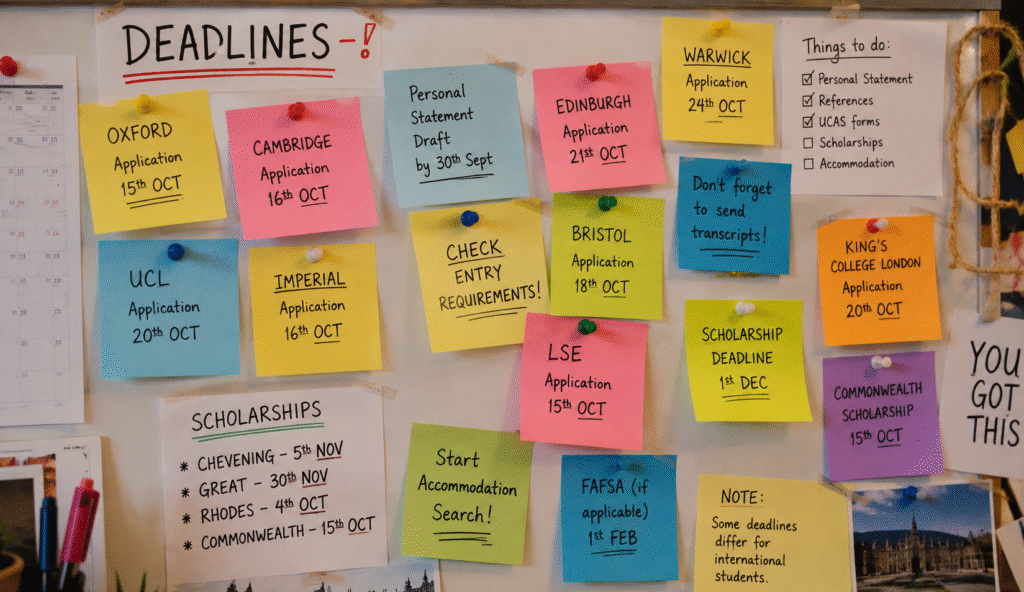
There’s also a timing issue people underestimate. UK postgraduate deadlines don’t always move like undergraduate ones — some courses close on a rolling basis, and popular programmes fill before the “official” deadline even shows up on a calendar. If you’re weighing that up, our guide to UK master’s programmes covers the timing quirks in more detail.
Where a Study Consultant Earns Their Fee
Here’s a slightly cynical way to think about it: a study consultant is worth paying for exactly where the stakes are highest and the paperwork is most fiddly. Three areas, consistently:
- Scholarship and financial aid advisory — because scholarship criteria are written in a special dialect of vague, and consultants read that dialect fluently.
- Interview and admission preparation — nursing, law, and medicine-adjacent courses in particular still run interviews, and a mock run genuinely changes outcomes.
- Pre-departure support — the unglamorous stuff. Bank accounts, accommodation, what to actually pack for a British winter (more layers than you think, fewer than your mother thinks).
The Money Question Nobody Wants to Ask First
Right, let’s talk fees — because avoiding this topic just makes people suspicious, and rightly so.
Some consultants charge the student directly. Others work on referral arrangements with universities, meaning the service is free at the point of use for the applicant. Neither model is inherently dodgy, but you should ask which one you’re dealing with before signing anything. A consultant who dodges that question is telling you something.
| Service | Typically Included | Who Usually Pays |
|---|---|---|
| University shortlisting | Course matching, entry requirement checks | Often free to student |
| Application submission | Forms, personal statement review, references | Free or small fee |
| Visa guidance | Document checklist, appointment prep | Varies by firm |
| Scholarship advisory | Matching, deadline tracking, essay support | Usually free |

Quick warning, not a scare tactic: if a consultant asks for a large upfront “guarantee” fee before you’ve even chosen a course, slow down. Reputable ed consultants are paid to guide you toward the right course — not to guarantee an outcome nobody can actually promise.
Undergraduate vs Postgraduate: The Process Isn’t the Same Animal
This trips people up constantly. Undergraduate applications in the UK run largely through UCAS, a single centralised system with fixed deadlines and a personal statement that covers every course you’re applying to at once. Postgraduate applications, by contrast, go directly to each university, on its own timeline, with its own rules.
If you’re weighing up the undergraduate route against something like our postgraduate options, the honest answer is: they need genuinely different strategies, not the same template with the dates swapped out.
Visas, Bank Statements, and the Part That Actually Causes Sleepless Nights
I won’t pretend this bit is fun. Student visa applications for the UK involve proving your finances, your English proficiency, and your intent to study — and the rules shift periodically, so anything printed in a brochure from two years ago is basically fiction now. Current requirements are always worth checking directly on the UK government’s official student visa page before you submit anything.
Where an education consultant genuinely earns their keep here is timing: knowing how far in advance a bank statement needs to be dated, which documents get rejected for being the wrong format, and when to actually book your visa appointment relative to your CAS letter arriving. Miss that sequencing and you can lose weeks.
For students weighing up the wider UK landscape — course options, cities, cost of living — our study in the UK hub is a reasonable starting point, and the British Council’s Study UK site is a solid independent reference too.
Choosing the Right Ed Consultant (Without Getting Sold To)
Right, practical bit. A few questions worth asking before you commit to any ed consultant:
- Do they work with a range of universities, or push you toward a fixed shortlist?
- Can they name specific scholarships relevant to your subject — not just “we’ll look into it”?
- Do they explain visa steps clearly, or wave vaguely at “we’ll handle it”?
- Will they tell you if a course is a poor fit, even if that costs them a placement?
That last one is the real test, honestly. Anyone can sell you an offer letter. Fewer will talk you out of the wrong one.
If nursing is on your radar specifically, funding routes there work quite differently from most subjects — our breakdown of nursing scholarships and NHS funding is worth a read before any consultation.
FAQ
Is using an education consultant free? Often, yes — many operate on referral agreements with universities, meaning there’s no direct cost to the student. Always confirm the fee structure before signing anything.
Do I need an ed consultant if I’m applying to just one university? Not necessarily, but even a single-course application benefits from a second pair of eyes on your personal statement and document checklist.
Can a study consultant help with scholarships specifically? Yes — scholarship and financial aid advisory is typically one of the higher-value services, since eligibility criteria are notoriously unclear without guidance.
How early should I contact an education consultant before starting university? Ideally 8–12 months ahead for postgraduate courses, and earlier for undergraduate routes tied to UCAS deadlines.
For a direct conversation about your own options, Uni Student HUB can be reached on +44 7361 804843, or via their contact page. Their blog also covers university-specific guides if you want to browse before booking a call.